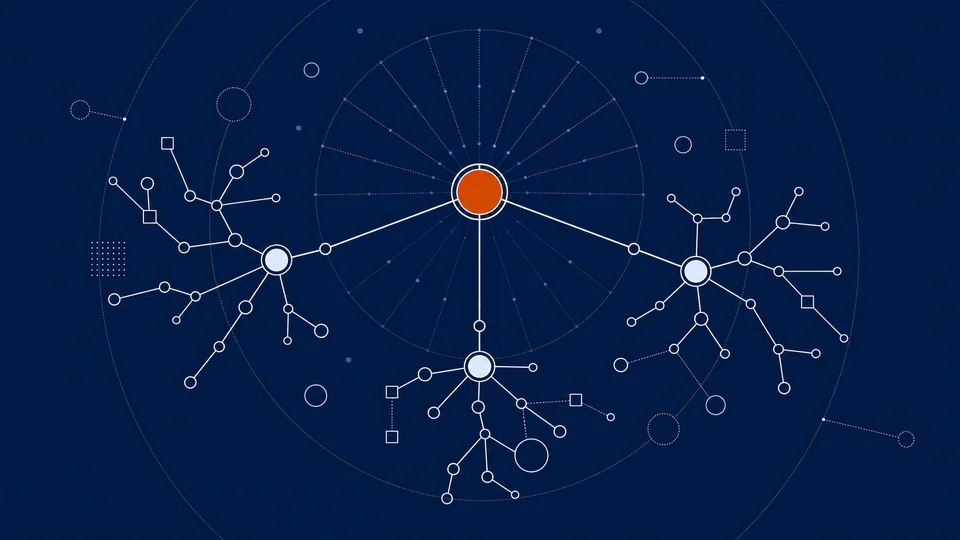
A graph is not a filing cabinet
Most software treats structure as a convenience for storage. Tables hold rows. Documents hold paragraphs. Search gives you a way back into the pile. That helps people retrieve things, but it does not help a system understand what kind of thing it is touching.
A useful graph does something stronger. It says the relationships are part of the meaning. A supplier does not merely sit near a part; it qualifies, constrains, and changes what the part means. A policy does not merely describe a write path; it can decide whether that path runs at all.
Theory becomes executable when the system can test it
Vellis lets the graph carry a point of view. In the Vellis RTG model, types, links, and constraints are not a diagram about the system. They are a theory the system can execute against: this node may connect to that one, this edge carries this implication, this proposed change has to pass this rule. The broader idea that a graph can be checked against explicit conditions also appears in the W3C Shapes Constraint Language, although Vellis uses its own schema model.
That is the wedge for agentic software. Agents do not need a larger pile of text. They need a world where the important distinctions are already named, where traversals reveal context, and where uncertain changes have somewhere to slow down.
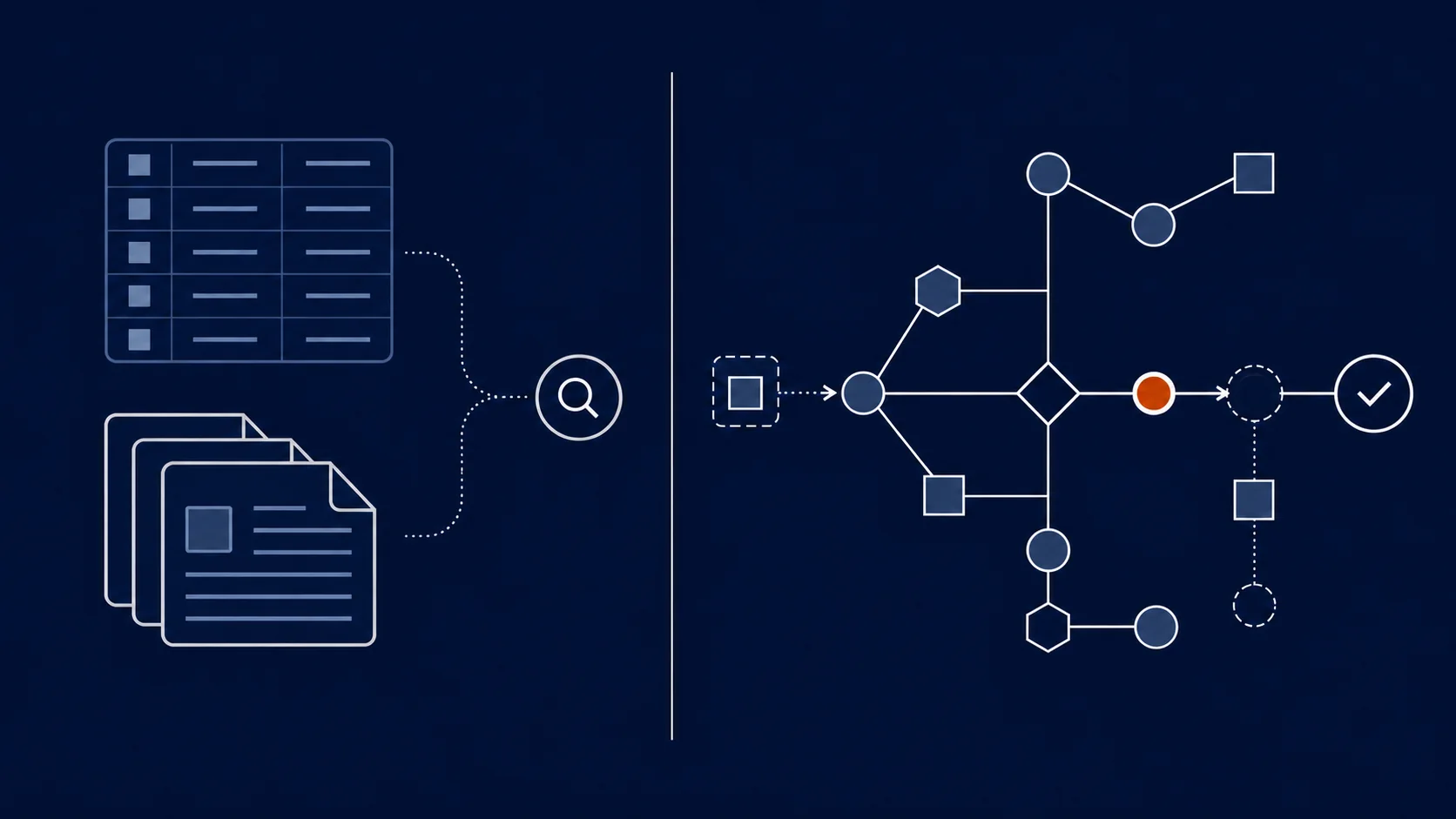
Legibility is what lets judgment stay human
The point is not to automate judgment away. The point is to make the system legible enough that judgment can happen at the right moment. When the graph knows what a thing is, what it depends on, and what policies attach to it, a human can review the meaningful decision instead of auditing the rubble afterward.
That is why the graph is more than storage. It is a compact theory of the domain: partial, revisable, and powerful precisely because the system can run it.
A year in, the constraint moved
A year of actually running the graph this way only reinforced part of the argument. Individual work got easier and faster than expected: the same task now moves with a person from a desk to a phone in a waiting room without losing quality, and a problem that used to take days to notice and fix can get caught and corrected in the same sitting. What hasn't kept up is coordination across a team. When one person can move this fast, staying right on your own stops being the hard part. Staying aligned with everyone else becomes it.